
Tallgrass Institute Discusses Need for Indigenous Peoples’ Consent in U.S. Push for Deep-Sea Mining
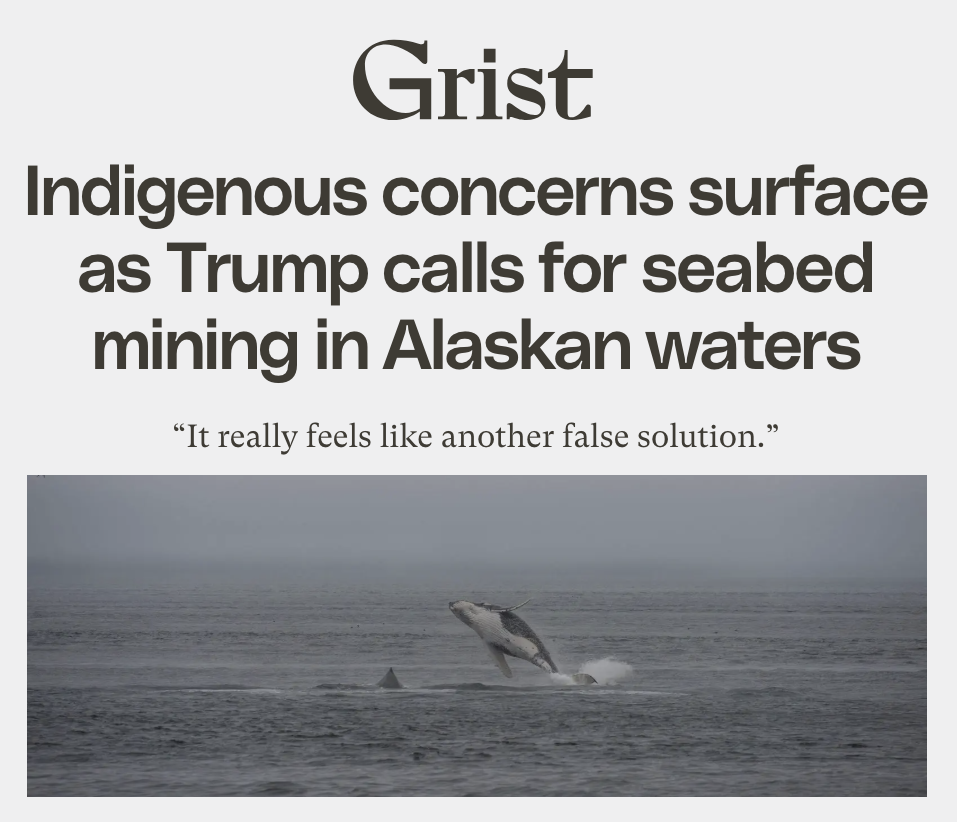
Grist continued its investigative series about the global push for deep-sea mining with the article, Indigenous concerns surface as Trump calls for seabed mining in Alaskan water.
Alaska is among the places — including American Samoa, Guam, and the Northern Mariana Islands — where the current Administration desires to open waters for seabed mining. All are “home to Indigenous Peoples with ancestral ties to the ocean,” notes the article, with affected waters off the coast of Alaska connected to more than 200 Native nations.
Kate Finn, Tallgrass Institute Founder and Executive Director, provided context, explaining “Indigenous peoples have the right to give and to withdraw consent. Mining companies themselves need to design their operations around that right.”
She raised concern that the nascent seabed mining industry will carry the risks of terrestrial mining, which has a long history of harmful impacts to Indigenous Peoples’ lands and territories. She discussed Indigenous Peoples’ right to consent to activities in their territories in International law, and that U.S. regulations alone may not be sufficient for companies to meet international legal standards, especially in a moment of deregulation.
“Companies will miss that if they’re only relying on the U.S. federal government for consultation,” she said.
Another Indigenous leader interviewed for the article, Jasmine Monroe, raised concern about the impacts deep-sea mining would have on her community in terms of subsistence. “Whatever happens in the ocean, it really does affect our way of life,” she said.