
News of Note 12/19/25: Congo’s Community-led Biodiversity Corridor, Brazil Upholds Indigenous Land Rights, Lumbee Tribe Federally Recognized
Top Stories
Congo’s communities are creating a 1-million-hectare biodiversity corridor (Mongabay)
“The NGO Strong Roots Congo is securing lands for communities and wildlife to create a 1-million-hectare (2.5-million-acre) corridor that spans the space between Kahuzi-Biega National Park and Itombwe Nature Reserve in the Democratic Republic of Congo. The effort requires multiple communities to register their customary lands as community forestry concessions under an environmental management plan, which, piece by piece, form the sweeping corridor. To date, Strong Roots has secured 23 community forest concessions in the area, covering nearly 600,000 hectares (1.5 million acres) of land.”
Brazil Supreme Court strikes down Indigenous land time-limit doctrine for second time (Courthouse News Service)
“Brazil’s Supreme Court upheld the traditional land rights of the country’s Indigenous people on Thursday, ruling for the second time to eliminate a doctrine intended to restrict their rights to land demarcation beyond the date the current Constitution was enacted. [...] Brazil currently has 823 demarcated Indigenous territories, covering just over 13% of the country’s land area, according to Terras Indígenas do Brasil.”
Lumbee Tribe becomes 575th federally recognized tribe (ICT News and Associated Press)
“The Lumbee Tribe of North Carolina achieved a goal more than a century in the making on Wednesday, securing full federal recognition after Congress approved the measure as part of the passage of a national defense bill. ‘It means a lot because we have been figuring out how to get here for so long,’ Lumbee Tribal Chairman John Lowery told the AP just moments after celebrating the victory in the office of North Carolina Sen. Thom Tillis. ‘We have been second-class Natives and we will never be that again, and no one can take it away from us.’ The tribe became the 575th federally recognized tribe.”
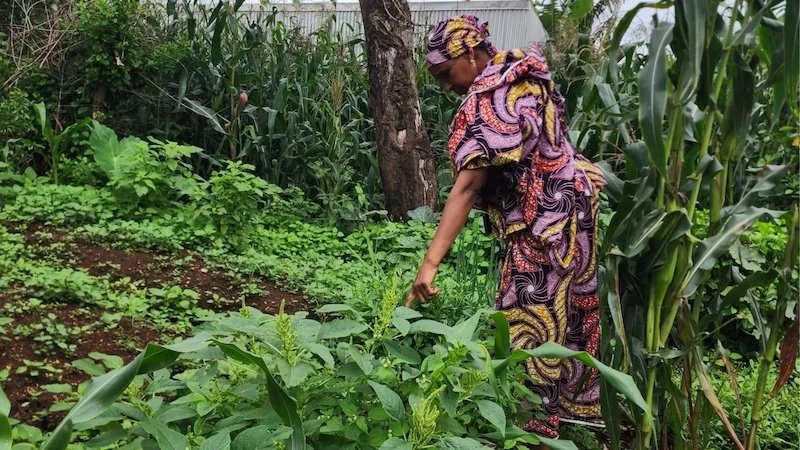
Cultural Survival Quarterly - December 2025: Rekindling Indigenous Kinship and Foodways
Reviving Ancestral Kinships Across Turtle Island Grasslands for Sustainable Community Futures
Reviving Kinship Routes through Stewarding Mishoon Culture on Long Island
Agroecology as Resistance: Mbororo Fulani Lead Food Sovereignty Efforts in Cameroon
More News
Indigenous Women on the Frontlines: Redefining investment risk in the energy transition (GreenMoney Journal)
Ombudsman to investigate World Bank Group’s role in environmental damages and Indigenous rights abuses in Nepal (Asia Indigenous Peoples Network on Extractive Industries and Energy)
Indigenous Peoples and Civil Society Organizations condemn Copper Mark for upgrading certification status of Indonesia’s PT AMNT to fully meet its criteria amidst ongoing complaint by affected communities (Asia Indigenous Peoples Network on Extractive Industries and Energy)
After centuries of conflict, Chile’s Indigenous Mapuches fear a far-right political turn (Associated Press)
All new roads lead to increased deforestation in Ecuador’s Indigenous territory (Mongabay)
UN human rights mechanisms urge Guatemala to end forced evictions, protect land rights defenders (International Service for Human Rights)
Division between First Nations over resource development could go on for decades: Yellowhead Institute (APTN News)
Ottawa's Indigenous advisers weren't told of pipeline deal with Alberta: chief (The Canadian Press)
2025 in Review: 25 Good News Stories from First Nations [Canada] (Coast Funds)
Pe’ Sla is a sacred place to the Lakota. Soon, it could be a graphite mine. (Earth Island Journal)
NABS [Native American Boarding School Healing Coalition] Documents 134 More Survivor Stories, Expands Digital Archive in 2025 (Native News Online)
Healing Together: Yurok Tribe welcomes back salmon, native plants, and Indigenous sovereignty (Earth Island Journal)
Research collaborations propel economic data in Indian Country (Center for Indian Country Development)
Photo via Cultural Survival.