
Tallgrass Quoted in Grist Article on AI Impacts to Indigenous Peoples
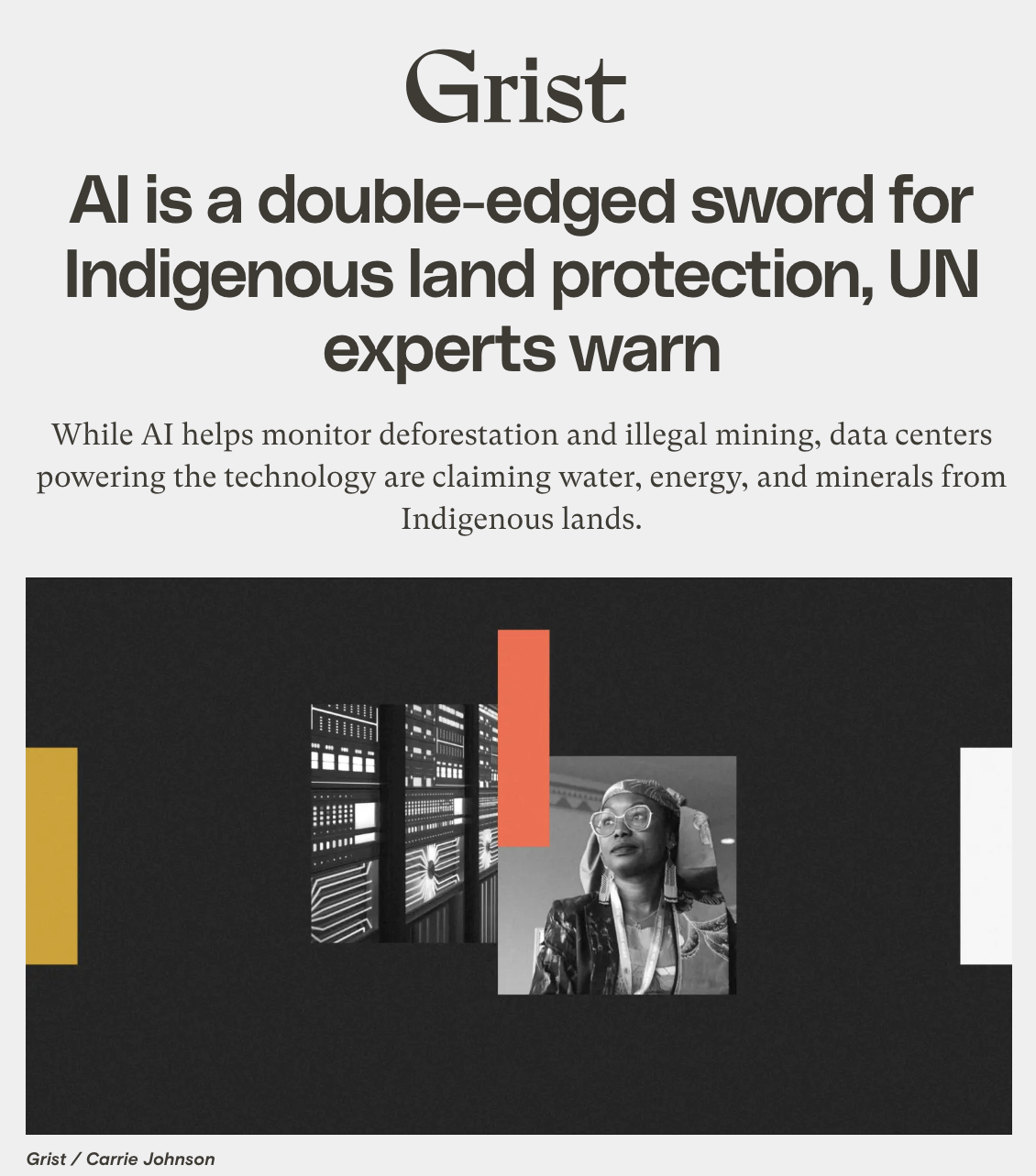
Grist as part of the Indigenous News Alliance reported on a new United Nations study about impacts to Indigenous Peoples from the AI technologies and infrastructure. The study, Indigenous Peoples and artificial intelligence was led by Hindou Oumarou Ibrahim, a former chair of the United Nations Permanent Forum on Indigenous Issues, where it was introduced this week. From the article:
Ibrahim explained that AI can help Indigenous communities monitor biodiversity, detect deforestation, illegal mining, wildfires or water contamination through the use of satellite imagery and sensors. “When combined with Indigenous Peoples’ knowledge, AI can help predict climate impacts, track wildlife movements, and strengthen land-use planning while helping to plan faster resilience strategies [...] to ensure the protection of Indigenous peoples and their territories, governments must prevent all forms of land-grabbing, water exploitation and mining activities related to data centers and energy sources, and respect Indigenous rights, worldviews and aspirations.
Experts discussed the threats AI can bring about from water, energy, and critical minerals use — resources often extracted from Indigenous territories — as well as the opportunities.
Kate Finn, Founder and Executive Director of Tallgrass Institute shared necessary criteria when looking at opportunity and potential impacts:
The consistent ask from Indigenous peoples around the world is that they want their free, prior, and informed consent respected before data centers go into their land […] As we approach AI from an Indigenous lens, it will necessarily have to take account of all of those different nodes, both the opportunity space, but also a protective space of lands, territories, and resources, and also of language and culture, and the creative property that Indigenous peoples have placed online.
Ibrahim concluded that AI as developed and used without Indigenous Peoples’ consent “risks repeating old patterns of extraction of the resource, data and appropriation of knowledge and the credit to these knowledge.”