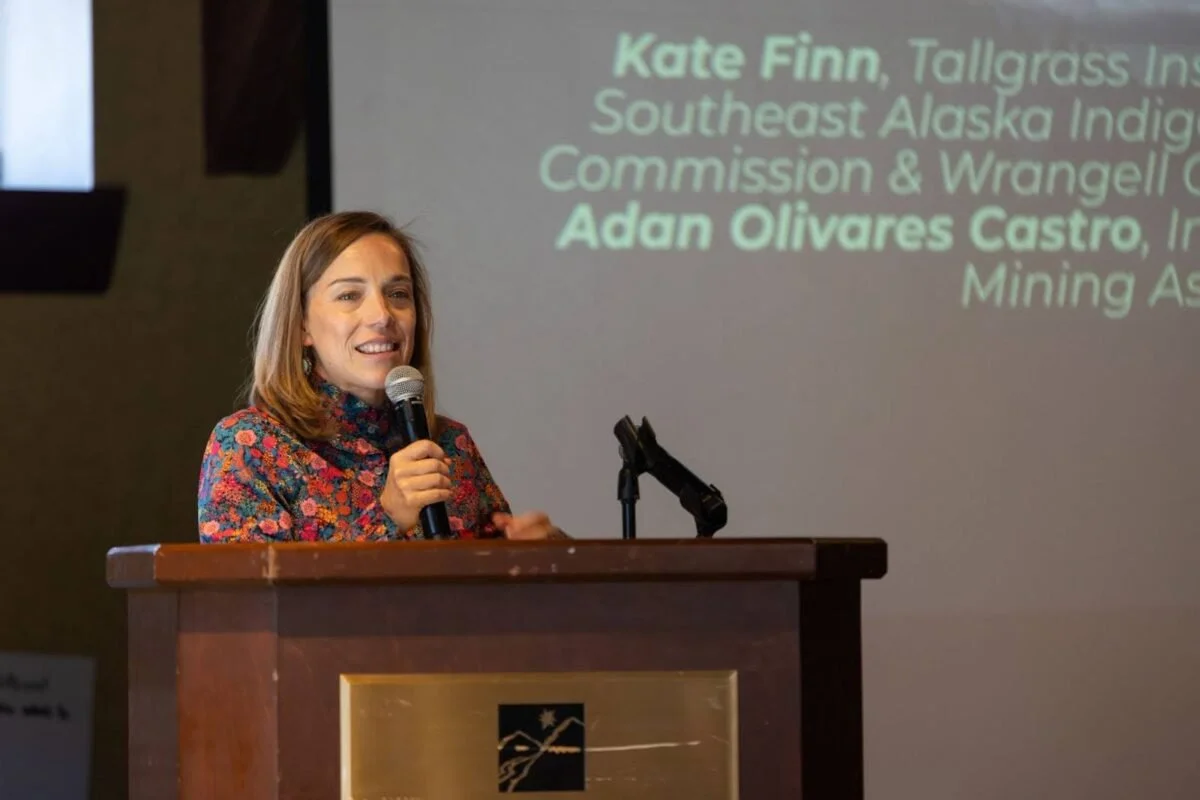
Tallgrass Institute at the 2025 Alaska Conference on Mining Impacts and Prevention

Kate R. Finn, Tallgrass Institute’s Founder and Executive Director, was invited to keynote a plenary on consent at the Alaska Conference on Mining Impacts and Prevention, May 6-8. From Alaska Conservation Foundation’s conference report released on June 6:
Beyond Consultation: The Power of Consent
Keynote speaker Kate R. Finn, founder of the Tallgrass Institute, delivered a clear message on the second day of the conference: Free, Prior, and Informed Consent (FPIC) is not a bureaucratic checkbox—it is a fundamental human right. “FPIC is not a buffet,” Finn told attendees. “You don’t get to pick one. It’s all of it together.” That means providing full and culturally appropriate information, engaging Indigenous communities before any planning begins, and—most importantly—honoring their right to say no.
Finn emphasized that in regions like Alaska, where Indigenous peoples have stewarded the land since time immemorial, this principle is especially critical. She also highlighted a promising global trend: the rise of Indigenous-led FPIC protocols. Around the world, communities are developing their own guidelines to instruct industry on how meaningful engagement must occur. “When companies arrive,” Finn said, “communities can say, ‘This is how we do FPIC here, and this is how we expect it to be respected.’”
A compelling local example came from Esther Reese, President of the Southeast Alaska Indigenous Transboundary Commission (SEITC), a consortium of 14 Tribes working to protect the Stikine, Taku, and Unuk Rivers from the threats posed by expanding mining projects in British Columbia’s upstream headwaters. Speaking alongside Finn, Reese shared how SEITC has taken proactive steps to assert Indigenous rights and demand consent as a non-negotiable part of British Columbia’s mine approval processes.
Together, Finn and Reese’s messages underscored a powerful shift: Indigenous communities are not waiting to be invited into conversations—they are setting the terms.