
Tallgrass Featured in ImpactAlpha’s Native CDFI Feature
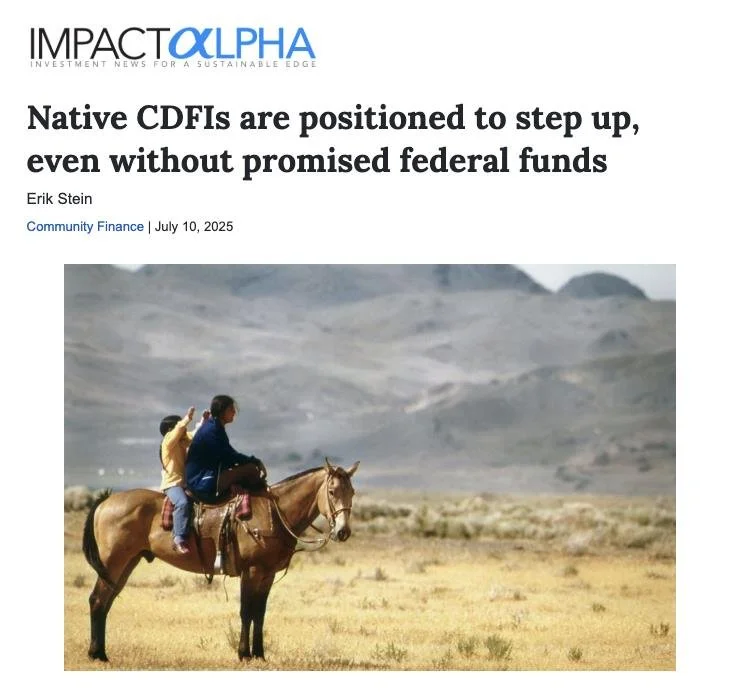
Tallgrass Institute was featured in ImpactAlpha’s Native CDFIs are positioned to step up, even without promised federal funds, which examined challenges and opportunities from the recently approved U.S. budget.
“There is a way to invest now to create alpha. And Indian Country is ready,” says Kate Finn of the Tallgrass Institute […] Finn urges investors to channel capital through CDFIs due to their strong community ties, flexible structures, and outsized impact.
With the pullback by the federal government, Tribal Benefit Agreements have emerged as a key tool for ensuring Native voices dictate how project development unfolds and what long-term resources communities receive in return, according to a new report from the Tallgrass Institute.
Tallgrass’s 2023 report, “Indigenizing Catalytic Capital,” positioned CDFIs not only as lenders but as designers of capital stacks that work for both Native communities and private investors looking to back tested models for climate resilience and economic inclusion (for background see, “Mobilizing capital in Indian Country”).
“They can be the nexus of relationships and good investment,” Finn says. “They’ve been there from the beginning—when an entrepreneur needed $500 to buy cookware or repair a truck. They hold the relationship in a way that’s necessary for impact to happen.”
The article highlights multiple Native CDFIs and groups leading innovative entrepreneurship and funds, including Akiptan, Native Community Capital, Navajo Power, Raven Group, Siċaŋġu Co., Spruce Root, and Sustainable Southeast Partnership.The article concludes:
Native CDFIs can play a key role in structuring such agreements, which outline how Tribes consent to and benefit from projects on their lands. The Tallgrass Institute report, “Tribal Benefits Agreements: Designing for Sovereignty,” emphasizes the important role of such agreements as federal funding and permitting protections being rolled back.
“TBAs and coordination with Tribal nations are critically important at this time–particularly as tools for project developers to de-risk a multi-year development process that can span administrations, states, and wide swings in policy,” the report says.
CDFIs, already trusted in their communities, can help structure or manage capital agreements that reflect Tribal priorities with legally binding contracts between Tribes and developers. “When investors can step in that way, it allows Native entrepreneurs to dream,” says Finn. “To dream past the next grant cycle. Past the next loan benchmark. And when you allow entrepreneurs to dream, that’s when the impact comes.”