
Joint Letter and Intervention Ask UN Transition Minerals Meeting to Prioritize Indigenous Peoples’ Rights
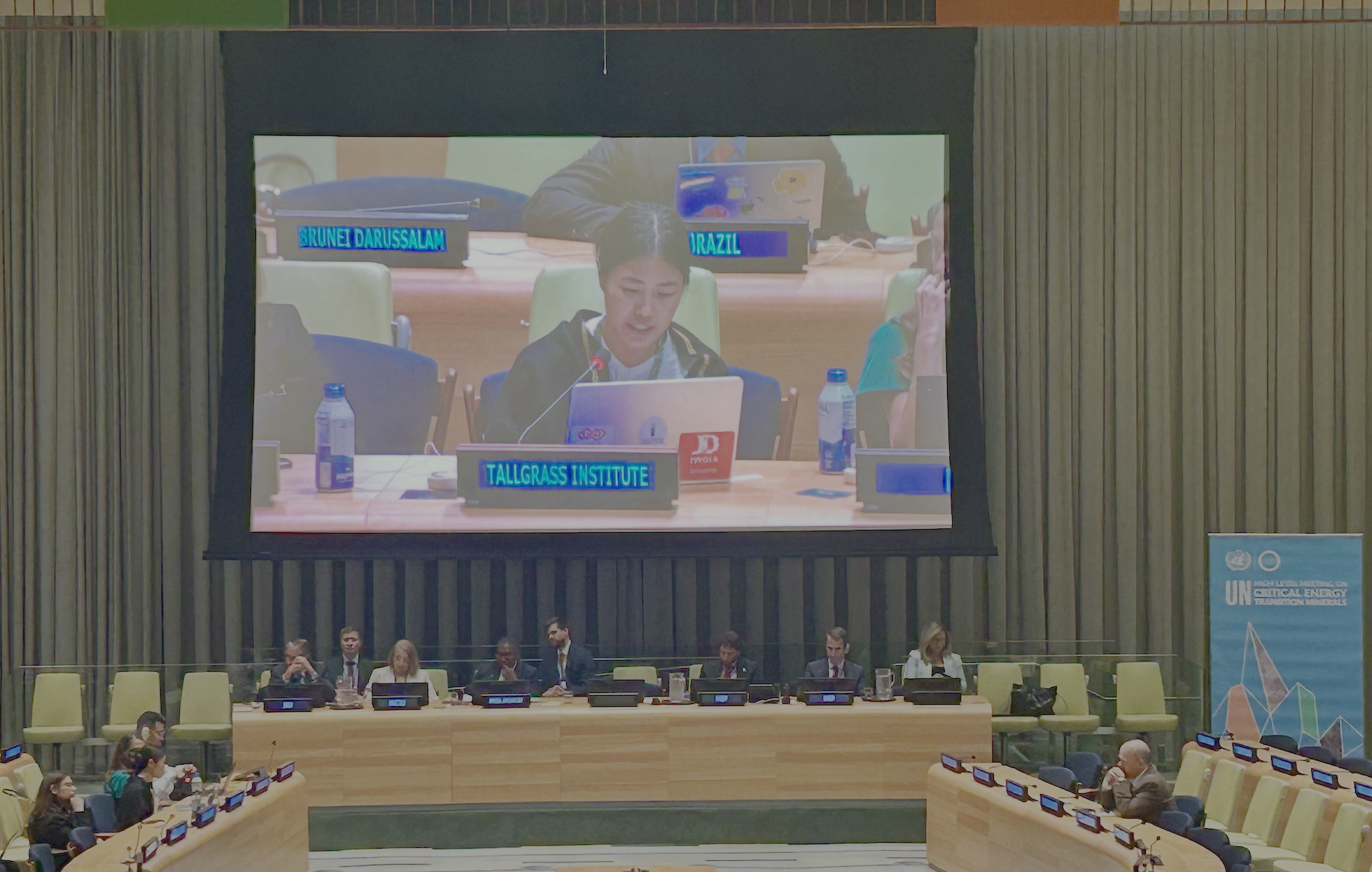
The UN High-Level Meeting on Critical Energy Transition Minerals, which took place July 14, 2026 provided a platform for governments, the private sector, industry, civil society, and Indigenous Peoples to discuss emerging challenges and opportunities from energy transition minerals development and use.
Representing the SIRGE Coalition, Nalori Chakma, Transition Minerals Advocacy Manager at Tallgrass Institute delivered a closing intervention to the UN panel.
“Indigenous Peoples territories are living systems of governance, culture, memory, food, water, and responsibility to future generations,” she said. “These lands are already under pressure from centuries of dispossession, extractive industries, infrastructure development, conservation measures, carbon markets, and now the growing demand for transition minerals. [...] Indigenous Peoples’ rights must be embedded across the whole process — not confined to one recommendation, one safeguard, or one consultation box.”
Chakma concluded with the importance of traceability among they UN’s actionable recommendations and wider ramifications of impacts:
A mineral can be fully traceable and still be unjust. It can have certification, [company] disclosure, and a government permit, and still come from a project where Indigenous Peoples’ rights were violated and FPIC was never obtained. [...] For Indigenous Peoples traceability must show not only where minerals come from but whether our lands and waters are affected, whether FPIC was obtained through our own institutions, and whether resultant harms or reprisals still exist. This information must have consequences for procurement, investment, public finance, subsidies, and other support. Traceability without consequences is not accountability.
Finally, Indigenous Peoples cannot be considered as data points or consulted only after decisions have largely been made. We are not simply stakeholders in critical mineral supply chains. We are collective rights-holders. Our role is to help shape implementation – its design, governance, monitoring, and review – through our own representative institutions. Only then can the commitment to justice become real for Indigenous Peoples and for the communities where critical minerals are found.
Also today, a civil society delegation delivered a joint letter to the UN high-level meeting, noting “pressure to extract minerals for green technologies, artificial intelligence and military purposes has increased dramatically, entrenching historical extractive patterns and making the paradigm shift even more urgent.
Signed by more than 130 organizations worldwide, including Tallgrass Institute, the letter calls on Member States to sustain UN leadership on mineral governance, support resource-rich countries advancing international cooperation, align multilateral development banks with the Panel's Guiding Principles, and build partnerships that deliver shared benefits and include affected communities and Indigenous Peoples in decisions.
Detailing “mutually beneficial partnerships,” the letter describes expectations for States “to protect defenders and uphold Indigenous Peoples’ rights to self-determination through their effective participation and respect of their Free, Prior and Informed consent as affirmed by the United Nations Declaration on the Rights of Indigenous Peoples (UNDRIP).”
Read the Letter and Watch the Intervention.
Photo: Nalori Chakma delivers intervention at the UN High-Level Meeting on Critical Energy Transition Minerals. Photo by Payal Sampat.