
Indigenous Peoples’ COP30 Priorities and Investor Recommendations
A record number of Indigenous Peoples – over 3,000 – are expected to attend the 30th session of the UN Framework Convention on Climate Change (COP30) in Belém, Brazil from November 10 to 21. It is the first time the conference will be held in the Amazon, which is one of the most biodiverse ecosystems in the world and ancestral home to hundreds of Indigenous communities. Indigenous Peoples from around the globe have organized to bring forward concrete priorities to COP30, such as respect for free, prior and informed consent (FPIC), protection of Indigenous Peoples in Voluntary Isolation and Initial Contact, a rights-based just transition, and more.
On October 28, Indigenous leaders and investment experts discussed key priorities and investor stewardship recommendations in Investor Briefing on Indigenous Peoples’ COP30 Priorities (video above). Presented by Tallgrass Institute, the webinar coincided with the release of a corresponding investor brief.
Indigenous Peoples’ Leadership at COP30
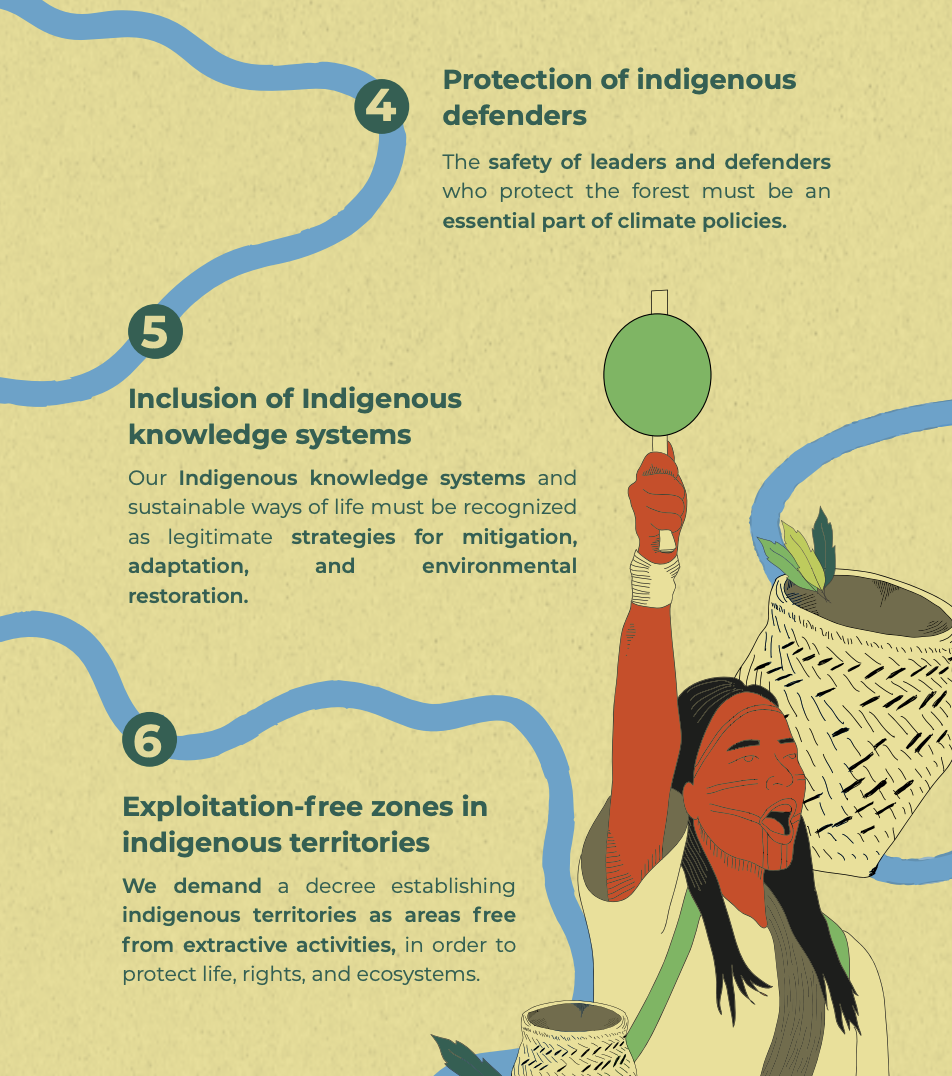
Emil Sirén Gualinga, International Advocacy and Finance Advisor at Quipa, shared a political declaration and priorities by Indigenous Peoples of the Amazon Basin and all Biomes of Brazil, published in anticipation of COP30. These documents delineate a number of Indigenous Peoples’ priorities, such as recognition of all Indigenous Territories, direct financing and financial autonomy, representation and effective participation of Indigenous Peoples in decision-making, protection of land defenders, inclusion of Indigenous Knowledge systems, and exploitation-free zones in Indigenous territories.
The call for direct climate funding to Indigenous Peoples is a key priority because only 2.1% of international climate funding goes to Indigenous Peoples. The call to develop exploitation-free zones is integral to protecting life, rights, and ecosystems from extractive activities. Approximately 100 uncontacted Indigenous communities live in the Amazon region of Brazil and no-go zones would protect these communities, as well as Indigenous Peoples’ lands more broadly. Sirén Gualinga emphasized how the declaration is “a political agreement and consensus,” and must be treated by investors as such.
Edson Krenak, Brazil Program Manager at Cultural Survival, underscored how Indigenous Peoples’ territorial governance is paramount for effective climate action. Indigenous lands and soils sequester nearly 300 trillion tons of carbon or 33 times the global emissions in 2017. With increasing deforestation and the failure of companies to obtain FPIC, Krenak stressed how it is challenging for Indigenous Peoples to effectively protect lands and biodiversity without legal recognition of Indigenous Peoples’ territories. He highlighted that “more than 60% of the Indigenous population in Brazil live outside of demarcated lands,” and that “FPIC is about territorial governance.”
Investment Stewardship Recommendations
Nabylah Abo Dehman, Head of Stewardship, Social Issues and Human Rights at PRI Advance, echoed Krenak and Sirén Gualinga’s points, reflecting that “Indigenous Peoples' leadership is not an adjunct to climate action” but rather “fundamental to its legitimacy and effectiveness.” She shared how PRI Advance, a stewardship initiative on human rights and social issues, has supported investors forwarding Indigenous Peoples’ rights and perspectives in corporate engagements through capacity building and providing Indigenous-led investor training.
Investors conducting due diligence should assume companies have not obtained FPIC for projects in the Amazon region and Indigenous Peoples’ territories.
Sirén Gualinga said investors conducting due diligence should assume companies have not obtained FPIC for projects in the Amazon region and Indigenous Peoples’ territories rather than trying to determine if consent was obtained or withheld. The formal consensus of Indigenous Peoples calling for no-go zones in the Amazon indicates that “any activity within those territories will not have consent.” In a similar call to uphold FPIC, Abo Dehman recommended that investors “press portfolio companies to have and operationalize FPIC” as enshrined in the UN Declaration on the Rights of Indigenous Peoples.
Krenak discussed the opportunity for investors to engage Indigenous Peoples, especially after COP30, and called on investors to do the necessary pre-work of understanding Indigenous Peoples’ lived realities and community demands. Abo Dehman also emphasized the importance of rightsholder engagement as a responsibility of investors and highlighted that PRI Advance plans to put out a stakeholder engagement guide in December.
Kate Finn, Founder & Executive Director of Tallgrass Institute who moderated the webinar, noted that many disparate issues and priorities surface with over 6,000 different Indigenous entities around the world. In view of the diversity of Indigenous Peoples’ cultures, Finn recommended that the private sector and investors ask companies “to design how they will engage with each entity from a baseline position of respect,” whether for dedicated no-go zones, FPIC, territorial governance, and other issues and concerns.
Shareholders often do not hear about Indigenous Peoples until risks manifest. Investors need to be persistent in engagements for long-term results.
“Respect for Indigenous Peoples' rights is really a prerequisite for credible benefit sharing,” said Abo Dehman as one lesson from PRI Advance’s engagements. Finn reflected how shareholders often do not hear about Indigenous Peoples until risks manifest, but “there are so many ways for investors to do their due diligence.” Both speakers affirmed the need for investors to be persistent in engagements for long-term results.
Resources and Staying Connected to COP30
To follow Indigenous Peoples’ leadership at COP30, Sirén Gualinga recommended investors reference updates from the Indigenous Caucus of the UN Framework Convention on Climate Change (UNFCCC) and Indigenous Peoples’ social media platforms.
For investors attending COP30, see lists of events hosted by the Securing Indigenous Peoples’ Rights in the Green Economy (SIRGE) Coalition, Cultural Survival, International Work Group for Indigenous Affairs (IWGIA), and Indigenous Peoples Rights International (IPRI).
Watch Tallgrass Institute’s webinar recording and find additional investor recommendations in the corresponding Investor Brief: COP30 and Indigenous Peoples’ Rights.